
For decades, game writers and narrative designers have leaned heavily on Joseph Campbell's Hero's Journey as an unshakeable design template. The classic cycle is comfortingly familiar: a protagonist receives a call to adventure, crosses the threshold into the unknown, conquers external trials, slays the metaphorical dragon, and returns home transformed, bearing the elixir to restore order.
However, when crafting psychological thrillers, tragedy, or guilt-driven interactive narratives, this traditional structure doesn't just fall short — it actively undermines the emotional core of the experience. To truly explore themes of avoidance, grief, and internal reckoning, narrative design must intentionally subvert this heroic myth.
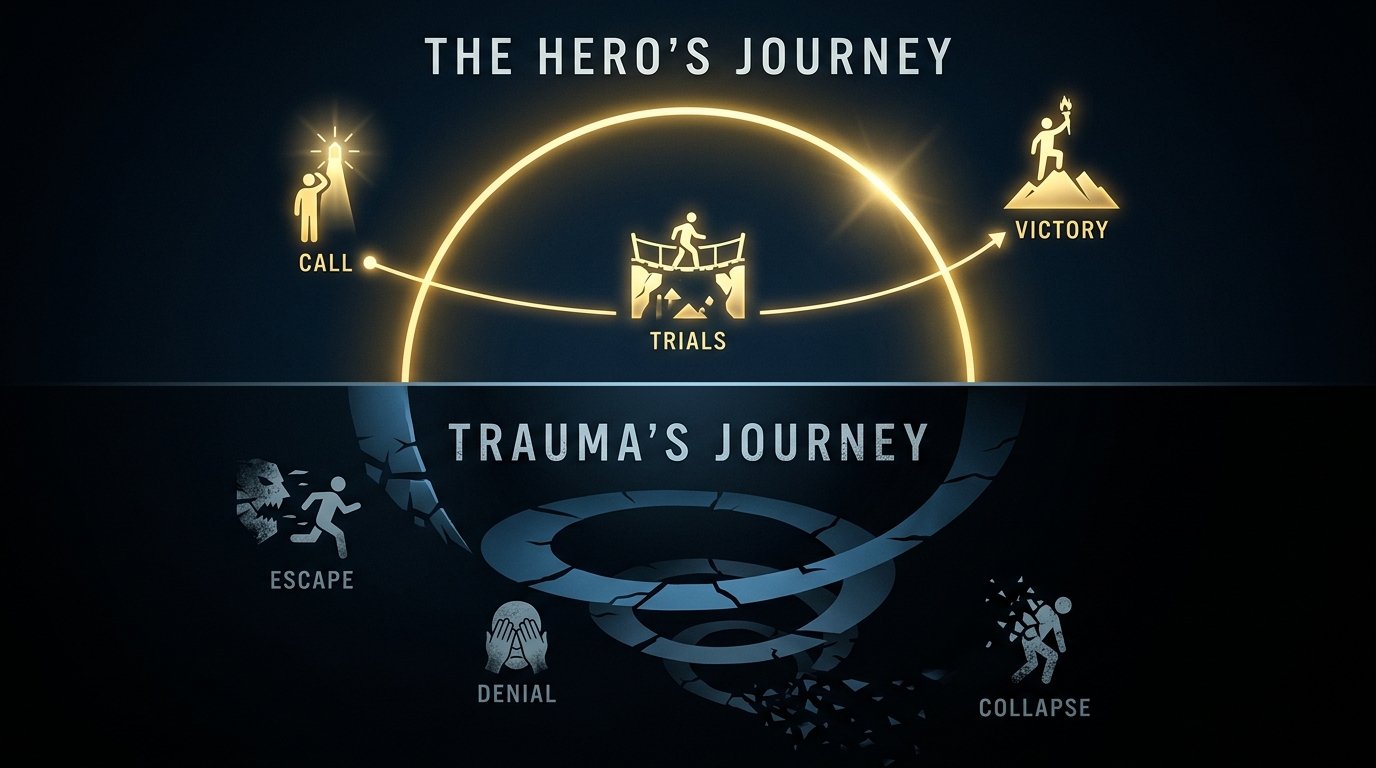
In what can be defined as "Trauma's Journey," the conventional storytelling beats are inverted to reflect psychological defense mechanisms rather than physical conquests:
The protagonist does not step into the unknown to gain glory or save the world. Instead, they flee into a meticulously constructed mental narrative or a distorted version of reality specifically designed to delay confronting an unbearable truth.
The "monsters," hostile environments, or mysterious village suspects are not external forces to be defeated. They are projection mechanisms built by the mind to shield itself from its own guilt. The player believes they are investigating an external threat, while they are actually navigating the walls of the protagonist's denial.
The climax is not a boss battle or a triumph over an enemy. It is the absolute breakdown of the rule-set protecting the protagonist's illusion. The true ordeal arrives when the player realizes that their actions were not uncovering a mystery, but running away from a historical reality.
The journey does not end with a celebratory return home. The "reward" is the cold, unvarnished weight of acceptance — leaving the player not with a fantasy of salvation, but with the quiet dignity of facing what cannot be undone.
Conquest to Archaeology
By deconstructing the hero fantasy, you transform the player from a passive savior into an active participant in an emotional reckoning. When the mechanics no longer reward power, gameplay evolves from an act of conquest into an act of psychological archaeology.