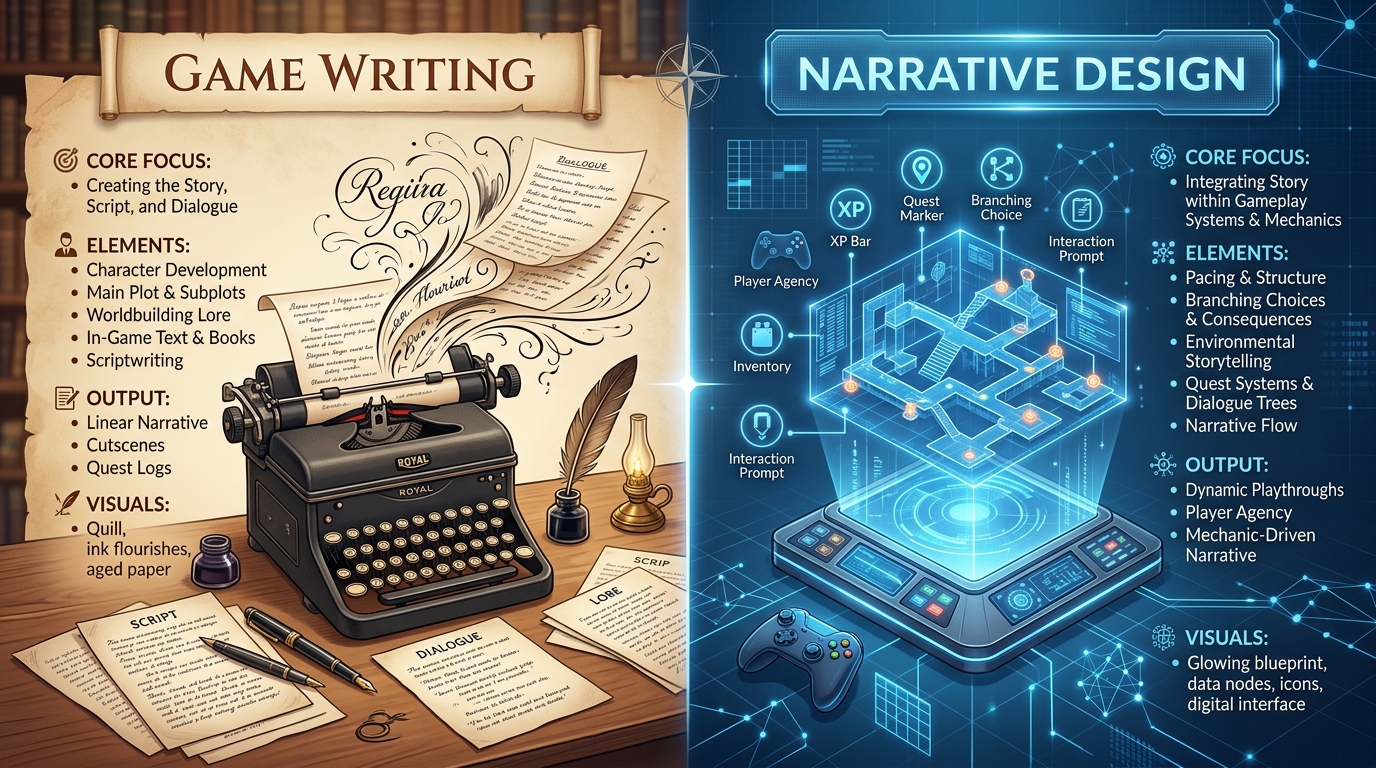
One of the most persistent misconceptions in game development is conflating Game Writing with Narrative Design. It is common to imagine a narrative designer sitting in a quiet room, penning pages of poetic lore, complex dialogue trees, and cinematic monologues. While a traditional game writer focuses on text and dialogue, a Narrative Designer operates at the intersection of story, systems, and mechanics. They are not merely storytellers; they are architects of the player's emotional experience.
Game Story
Game Writing
- Dialogue Scripts
- Character Backstories
- Item Descriptions
- Cutscene Monologues
Narrative Design
- Pacing & Camera Rules
- Environmental Telling
- Mechanics as Metaphors
- Player Agency Rules
The Fundamental Divide: Plot vs. Story
To understand narrative design, one must first master the distinction between Plot and Story:
The linear skeleton of events — what happens, when it happens, and the logical sequence of occurrences (e.g., a soldier returns to his village, searches for a missing girl, and discovers a hidden truth).
The emotional journey and meaning derived by the player as they navigate those events (e.g., how the protagonist lives with guilt, how the environment mirrors their denial, and how the player internalizes their isolation).
A game writer designs the plot; a narrative designer crafts the conditions for the story to be felt.
Narrative Embedded in Systems
When player agency enters the equation, traditional linear storytelling collapses. You cannot force a player to feel grief or suspense purely through a ten-minute cutscene or an exposition-heavy NPC dialogue. If a scene interrupts the flow of gameplay, the player detaches from the experience. A narrative designer embeds story directly into game systems:
- Pacing and Movement as Emotion. Instead of writing a monologue about a character's hesitation, a narrative designer subtly reduces movement speed or adjusts footstep audio as the character approaches a traumatic threshold.
- Camera Framing as Psychological Pressure. Utilizing camera behavior — such as narrowing the field of view or introducing micro-delays in tracking — communicates claustrophobia and paranoia far more effectively than written words.
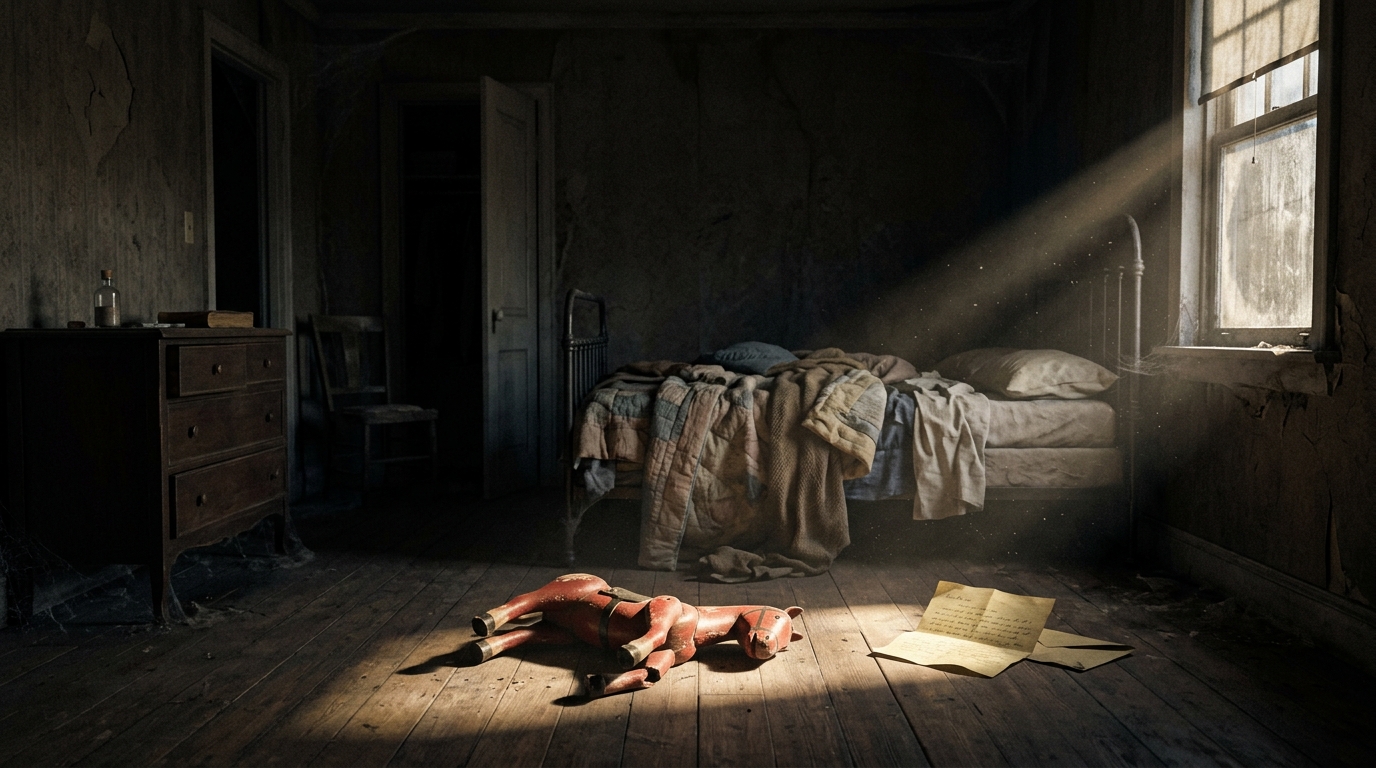
- Environmental Continuity & Negative Space. Placing objects, empty frames, or altered lighting that force the player to make their own deductions rather than reading an explanatory journal entry.
The Core Ethos
In narrative design, the most important question is never "How do I tell this part of the story?" It is always "How does the player experience this emotion through action?" If you strip away every line of written dialogue from a game, a well-designed narrative structure will still communicate its emotional core through the controller, the camera, and the environment.